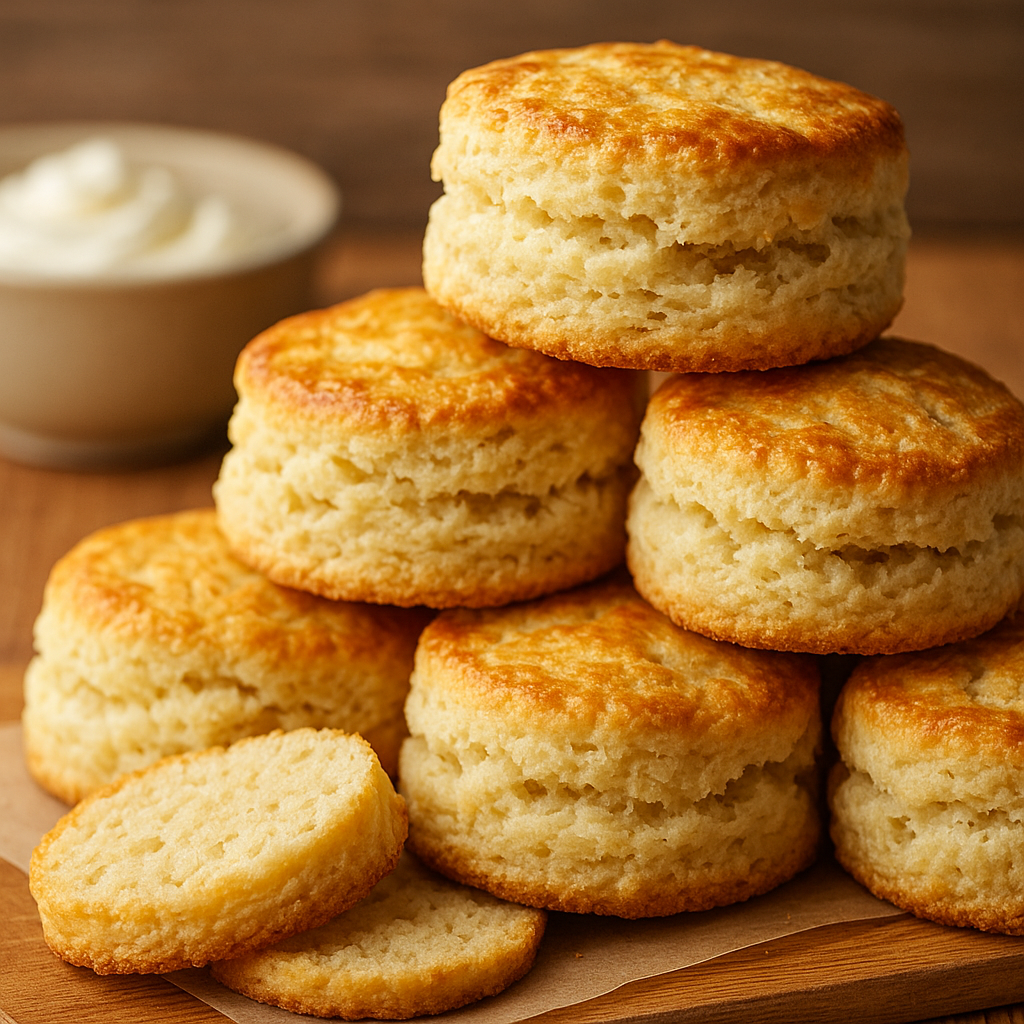
Want sky-high, tender scones with a buttery crumb and lightly crisp tops? This method focuses on cold fat, minimal mixing, and steam-powered lift—the holy trinity of fluffiness.
At a Glance
- Prep: 10 minutes (+10 minutes chill)
- Bake: 12–15 minutes
- Yield: 8 large or 12 small scones
Why These Scones Get So Fluffy
- Cold butter = steam pockets that puff the dough.
- Buttermilk acidity reacts with leaveners for extra rise.
- Minimal mixing keeps gluten soft, not tough.
- Thick dough + tall cut means taller scones.
- Hot oven sets the rise fast.
Ingredients (Metric + Cups)
- 300 g cake flour (2½ cups), plus extra for dusting
- 2 tsp baking powder
- ¼ tsp baking soda (bicarb)
- 60 g white sugar (¼ cup) — optional for sweeter scones
- ½ tsp fine salt
- 85 g cold unsalted butter (6 Tbsp), diced or grated
- 200–220 ml cold buttermilk (¾–scant 1 cup) — or ½ milk + ½ plain yoghurt
- 1 tsp vanilla extract (optional)
- For tops: 1 beaten egg or 2 Tbsp milk
No buttermilk? Use 200 ml milk + 1 Tbsp lemon juice; rest 5 minutes.
Method
- Preheat oven to 220°C (fan 200°C). Line a tray with baking paper.
- Whisk dry: flour, baking powder, bicarb, sugar, salt.
- Rub in butter: Toss butter in dry mix, then rub or grate it in until you have pea-size bits (keep some visible—those create layers).
- Add liquids: Stir buttermilk (and vanilla) into the bowl. Use a fork and stop when a shaggy dough forms. If a few dry streaks remain, that’s perfect.
- Quick fold: Tip onto a floured surface. Pat into a rectangle, fold in thirds like a letter, rotate, and pat again. Do this 2–3 times to create flaky layers without kneading.
- Shape thick: Pat 2.5–3 cm thick. Cut with a floured 5–6 cm round cutter (straight down; don’t twist) or slice into wedges.
- Chill (secret weapon): Move cut scones to the tray and chill 10 minutes. Brush tops with egg or milk.
- Bake: 12–15 minutes until tall and deeply golden. Cool 5 minutes. Serve warm with butter, jam, and cream.
Pro Tips for Maximum Fluff
- Keep it cold: If kitchen is warm, chill flour and cutter 5 minutes; freeze butter 10 minutes.
- Wet dough wins: Slightly sticky is better than dry. Add a teaspoon of buttermilk if crumbly.
- Close bake: Place scones just touching on the tray for softer sides and taller rise.
- Fresh leaveners: Replace baking powder every 3–6 months.
- High–then–lower (optional): Start 5 minutes at 225°C, then finish at 200°C for extra lift + even bake.
Variations
- Cream Scones (ultra tender): Swap butter + buttermilk for 250 ml heavy cream; skip bicarb.
- Cheddar & Chive (savory): Reduce sugar to 1 tsp; add 100 g grated cheddar + 1 Tbsp chopped chives; brush with milk.
- Raisin or Choc Chip: Fold in 100 g raisins or chips before adding liquids.
- Glaze (sweet): Mix ½ cup icing sugar + 1–2 tsp milk; drizzle over cooled scones.
Troubleshooting
- Flat & spread: Butter too warm or dough too wet → chill shaped scones 15 minutes; ensure oven is fully preheated.
- Dense/tough: Overmixed or rolled thin → fold lightly; keep thickness 2.5–3 cm.
- Floury taste: Under-mixed dry pockets on top → brush off excess flour before baking.
Storage & Reheat
- Room temp: Airtight 1–2 days.
- Fridge: Up to 5–7 days.
- Freeze: Up to 1–2 months (baked or unbaked).
- Reheat: 160°C for 5–8 minutes, or microwave 10–15 seconds.
Quick Recipe Card (Copy/Paste)
300 g flour • 2 tsp baking powder • ¼ tsp bicarb • 60 g sugar • ½ tsp salt • 85 g cold butter • 200–220 ml cold buttermilk
Mix dry → rub in butter → add buttermilk to shaggy dough → fold 2–3× → pat 2.5–3 cm → cut → chill 10 min → bake 220°C 12–15 min.
No time to bake? Get fresh, fluffy scones delivered from local vendors—bulk 5L/10L/20L sleeves available. Order now on The Scones Delivery.